Key takeaways
- For decades, consumer research has forced a trade-off: depth (in-home ethnography, 8 to 12 participants, one market) or scale (surveys, hundreds of respondents, no context). Both have structural limitations leadership has learned to live with.
- Surveys produce stated attitudes that often bear little resemblance to actual behaviour. Traditional ethnography produces rich insight that's easy to dismiss as anecdote because the sample is too small to feel credible at a leadership table.
- Mobile ethnography breaks the trade-off by using participants' own smartphones to capture longitudinal, in-context behaviour, across 50 or more participants in multiple markets at the same time.
- Environmental scans (a rear-camera pan across a fridge, pantry, or bathroom) reveal the real competitive landscape and category behaviour in ways no survey question can approximate.
- The commercial impact lands hardest in product innovation, multi-market consumer insight, category and brand strategy, and packaging and product experience, where rich, in-context evidence at scale changes what teams build, ship, and reposition.
Why has consumer research always been a depth-or-scale compromise?
Ask any insight professional about their research methodology and, somewhere in the explanation, you'll find a compromise. Traditional in-home ethnography is where the richest insight lives: seeing the actual fridge, the product stored in a way the brand never intended, the workaround someone quietly invented because the packaging doesn't quite work. But it's expensive, logistically demanding, and almost always limited to 8 to 12 participants, one market, and several weeks of fieldwork. The depth is real. The scale isn't there.
Surveys solve the scale problem efficiently. Hundreds of respondents, multiple markets, fast turnaround. But in solving for scale, surveys strip away almost everything that makes consumer insight genuinely useful for product and innovation decisions. Asked to describe their "typical" usage, people give you a flattened, averaged version of themselves, accurate in the broadest sense but emptied of the physical context, habitual detail, and environmental reality that shapes actual behaviour. As Harvard Business Review's foundational piece on corporate ethnography noted, the methodology is now central to understanding customers across industries, precisely because surveys and interviews leave too much unseen.
Focus groups sit somewhere between the two without fully delivering on either. Participants describe their usage rather than demonstrate it. The social dynamics of a group setting shape what gets said. The messy kitchen counter that would reveal the real friction in your product experience never makes it into the room.
For a long time this felt like the structure of the problem, not a solvable limitation. Depth cost scale. Scale cost depth. Research teams made their peace with whichever compromise they were managing and moved on. Recent demand patterns suggest this is changing. Teams running diary, longitudinal, and in-the-moment approaches are growing in number, precisely because they're no longer willing to accept the trade-off.
Why doesn't either compromise actually work?
The limitations of ethnography at small scale are well understood. Leadership doesn't act on 10 participants. Findings from one city don't generalise to three markets. The cost and time required for proper in-home fieldwork means it gets used sparingly, reserved for major innovation projects rather than embedded into how teams routinely learn about consumers.
The limitations of scale-first methods are subtler but arguably more damaging, because they're less visible. A survey can tell you that 67% of your target audience says freshness is their most important purchase criterion. What it cannot tell you is that the same audience, when observed at home, keeps your product at the back of the fridge behind other items, reaches for it inconsistently, and has developed usage habits that bear little relationship to the intended product experience. The number is real. The behaviour it describes isn't.
This gap between what people report and what they actually do, explored in more depth in our piece on bridging the say-do gap, has structural roots in methodology. It isn't a flaw that better survey design can fix. It's a consequence of asking people to reconstruct behaviour from memory, in an environment entirely different from where that behaviour occurred. Asynchronous qualitative research offers a practical path past this, capturing responses in participants' own time, in their own environment, without the post-rationalisation effect that makes synchronous methods unreliable for habitual behaviour.
The insight that actually moves innovation forward tends to be specific: the physical workaround someone invented, the storage habit that reveals a design gap, the spontaneous comment made while opening a product for the first time. That specificity doesn't survive the translation to a survey question. And at 10 participants, it doesn't survive the scale required to convince a leadership team to act on it.
What does breaking the depth-vs-scale trade-off look like?
Mobile ethnography works by putting the research tool in participants' own hands, their smartphone, and asking them to capture their lives as they happen. Not to recall their behaviour in a survey. Not to perform it for a researcher who's visiting. To document it: the actual kitchen, the actual morning routine, the actual moment of reaching for a product on a shelf.
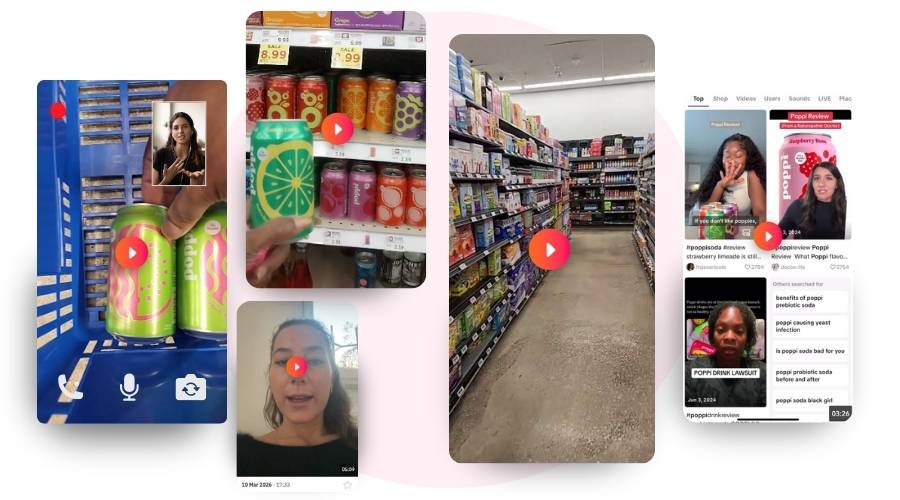
Using a combination of video diary tasks, environmental scans (participants using the rear camera to show their physical space), photo tasks, and researcher prompts sent in real time, a mobile diary study captures behaviour longitudinally, across days or weeks, in the environments where it actually occurs. And it does this simultaneously across as many participants and geographies as the study requires.
The absence of a scheduled researcher visit matters more than it might appear. Participants who know a researcher is coming tidy up. The product that's been stored in the wrong place because the packaging made the intended storage method impractical gets moved before anyone arrives. Mobile diary studies don't have this problem. Participants capture their own environments on their own terms, and over several days, the footage settles into something genuinely reflective of how people actually live. This is the foundation of what Indeemo describes as always-on research: sustained, scalable insight that follows behaviour through daily life rather than dropping in on it occasionally.
According to ESOMAR's Global Market Research 2024 report, technology-enabled research now accounts for 20% of the global market research sector, the fastest-growing segment, with Europe leading at 27%. The shift toward in-context, mobile-first methods is not a niche trend. It's the direction the industry is moving.
How does the rear camera become a research instrument?
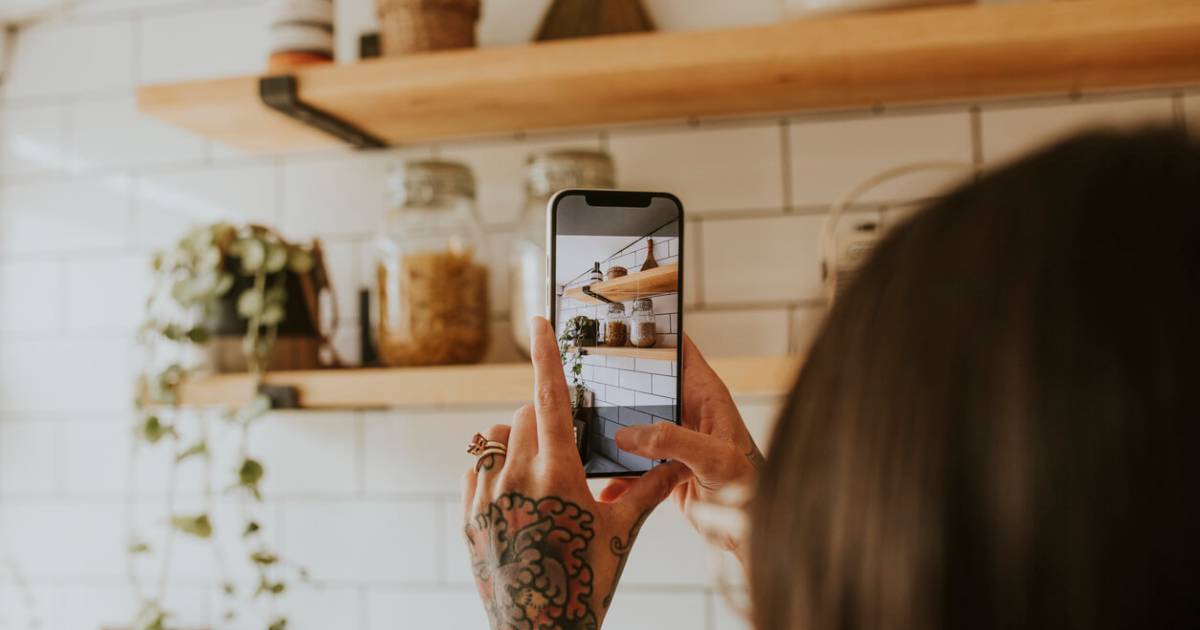
One of the most consistently useful elements of in-context consumer research is also one of the simplest: asking participants to show rather than tell. Environmental scans, where a participant slowly pans the rear camera across their pantry, bathroom shelf, or car, reveal the real competitive landscape of the home environment in a way that no survey question can approximate.
What brands are actually present? How is the product being stored? What's sitting next to it, and what does that suggest about how the consumer thinks about the category? What's missing that should be there? These questions are answerable from a rear-camera video in thirty seconds. They're very difficult to answer from a survey response, and expensive to answer from a traditional home visit limited to a handful of participants.
At scale, across 50 or more participants in multiple markets, this kind of visual data starts to tell a genuinely different story about category behaviour than any attitudinal measure can produce. Combined with AI video analysis, patterns across dozens of environmental scans become searchable and comparable, turning visual data into structured insight at a speed that manual analysis can't match.
Where does the depth-and-scale problem have the most commercial impact?
How do you get leadership to act on qualitative insight?
There's a version of the depth-and-scale challenge that has nothing to do with methodology and everything to do with organisational dynamics. It's the conversation with leadership where the ethnographic insight, rich and specific and genuinely surprising, gets dismissed because it came from 10 people. Or the innovation recommendation that doesn't land because the evidence is a strategist's synthesis of a research report, rather than something people can see for themselves.
Video evidence from real homes changes this dynamic. A two-minute clip of a real consumer in their real kitchen, explaining in their own words why the product doesn't fit into their routine, is harder to argue with than a slide presenting the same finding as a percentage. It builds the kind of organisational empathy that shifts how teams think about their consumers, not just what they know about them. It's how teams get closer to the people they're designing for, and innovate faster as a result. As we explored in our piece on the evolution from testers to co-creators, the format of evidence matters as much as its content when it comes to driving genuine innovation decisions.
Mintel's research consistently shows that brands which understand real consumer context, not just stated attitudes, design more effective products and more resonant campaigns. PwC's Voice of the Consumer survey of more than 20,000 global consumers reinforces this: there is a persistent gap between what consumers say drives their decisions and what actually does when real trade-offs are required. Closing that gap requires research that operates in context, not research that asks people to reconstruct context from memory.
How do you design in-context research that delivers both?
Lead with the environment, not the question
The most valuable first task in any in-home consumer diary study is a simple environmental scan: show us your kitchen, your bathroom, your pantry. What participants reveal before any question is asked often reframes the rest of the study. You see the real product landscape. You see what the research needs to investigate. This is the foundation of digital ethnography done well.
Design for ordinary moments, not research occasions
Tasks framed as documentation of everyday life, "show us your morning routine", "take us through your weekend shop", produce more naturalistic and revealing data than tasks that feel like exercises. The closer the language is to how participants describe their own lives, the less curated the response becomes. This principle underpins effective mobile ethnography design across all categories.
Build longitudinally to let behaviour settle
Day one of a diary study is often the most self-conscious. By day five or six, participants are capturing their lives rather than performing them. Studies running across at least a week, with tasks distributed across different times and occasions, produce qualitatively different data from single-session captures. Remote qualitative research makes this longitudinal approach practical across geographies that would previously have required separate fieldwork trips.
Probe in the moment, not after it
Real-time researcher prompts sent while a participant is mid-shop or mid-usage occasion capture contextual reasoning that dissolves within hours. The "why did you reach for that?" asked at the shelf produces a fundamentally different answer from the same question asked in a debrief. Indeemo's push notification system is built specifically for this kind of in-the-moment probing.
Scale to make the insight credible, not just interesting
The goal isn't 50 participants for its own sake. It's enough participants across enough contexts that the patterns you find are actionable, and the evidence you present can't be dismissed as anecdote. Think about what scale is required for leadership to act, then design the study to reach it. Indeemo's integrated recruitment makes reaching that scale faster than traditional fieldwork approaches.
Frequently asked questions
What is in-home consumer research and how does it differ from surveys?
In-home consumer research captures behaviour in the environments where it actually occurs, including kitchens, bathrooms, and shopping trips, rather than asking people to recall and report it. Where surveys produce stated attitudes and averaged self-descriptions, in-home methods produce visual and behavioural evidence: how products are stored, how they're actually used, what workarounds people have developed, and what the physical context of consumption really looks like. The fundamental difference is between asking people about their behaviour and observing it. For a deeper comparison of methods, see our guide to asynchronous qualitative research.
What is mobile ethnography and how does it work?
Mobile ethnography uses participants' own smartphones to capture behaviour as it happens, through video diary tasks, photos, environmental scans, and audio narration, over a period of days or weeks. Participants complete tasks in their own time, in their own environments, using a research app that feels familiar rather than clinical. Researchers can monitor submissions in real time and send probes at key moments. The methodology delivers the contextual richness of in-home ethnography at a scale (typically 30 to 50 or more participants, across multiple markets) that traditional in-person methods cannot reach.
What is the difference between a video diary study and traditional ethnography?
Traditional ethnography involves a researcher visiting a participant's home to observe directly. It produces rich insight but is limited to small samples in a single geography, and the scheduled visit creates a performance effect where participants present a tidier, more curated version of their real environment. Video diary studies ask participants to self-record moments as they happen, longitudinally, using their smartphone. The absence of a researcher visit produces less curated behaviour, and the digital format makes it practical to run studies with 50 or more participants across multiple markets at the same time.
How do you get leadership to act on qualitative consumer research?
The two most common reasons qualitative insight fails to drive decisions are sample size (leadership dismisses findings from 10 participants as anecdote) and format (a research report doesn't create the organisational empathy that changes how teams think). Mobile ethnography addresses both. Studies can reach 50 or more participants, giving findings credibility at scale. And video evidence from real homes creates a different kind of engagement than a synthesised report. People act on what they've seen differently from what they've read. Our piece on the shift from testers to co-creators explores how participant evidence is increasingly shaping innovation decisions directly.
Can mobile ethnography run across multiple markets simultaneously?
Yes, and this is one of its most significant advantages over traditional in-person methods. Indeemo's platform supports studies across multiple countries at the same time, with the app available in 30+ languages and AI-powered transcription and translation built in. Participants complete tasks in their own language and environment. Researchers access all submissions through a single dashboard. The result is genuinely comparable cross-market data rather than separate studies conducted by different researchers with different fieldwork conditions.
The research that earns a seat at the innovation table
The consumer insight that changes product decisions tends to be specific, visual, and impossible to argue with. It's the footage of someone using a workaround that reveals a design flaw. The environmental scan that shows your product sitting in a context the brand team never anticipated. The morning routine that explains exactly why the intended usage occasion isn't happening the way anyone assumed.
That kind of insight has historically been expensive to generate and easy to dismiss when it is, because it came from 10 people, or one market, or a researcher's interpretive summary rather than footage anyone can watch. Always-on video research changes this by making in-context consumer insight a continuous capability rather than an occasional project, embedding the consumer voice into how organisations learn, not just what they occasionally commission.
The depth-and-scale trade-off that shaped consumer research for a generation has a different answer now. The methodology exists to give you in-home ethnographic richness at the participant numbers and geographic breadth that organisations actually need to act on what they find. The teams building that capability now are the ones whose consumer insight will carry genuine weight in the decisions that matter, not as interesting context, but as the evidence that shapes what gets built, reformulated, repositioned, and launched.