
Key takeaways
- Consumer sustainability data is everywhere, but it often contradicts itself. In-the-moment research helps brands understand the real behaviours behind the numbers.
- Diary studies and mobile ethnography capture what people actually do, not what they recall doing. That gap is where the most useful insight lives.
- Greenwashing scepticism is rising sharply: 62% of consumers now believe companies are greenwashing – up from a third in 2023. Brands need to understand real consumer values, not just stated attitudes.
- Sustainability research spans purchase decisions, daily habits, brand perception, and behaviour change – mobile methods work across all of them.
- With Indeemo you can recruit from a global panel, research across 30+ languages, and analyse responses with AI.
Why is sustainability research a priority for brands right now?
Sustainability is one of the most consistently researched topics on Indeemo. Across every industry and sector, brands are investing heavily into understanding all aspects of it -from electric vehicle customer journeys and Gen Z sustainability attitudes to waste disposal behaviours, vitamins and supplements, and designing behaviour change interventions for transport modal shifts.
The variety of sustainability research briefs is enormous. But there's one common thread across almost all of them: the need to go beyond existing quantitative data and get to the in-the-moment understanding of what people actually do, think, and feel.
According to Simon-Kucher's 2024 Global Sustainability Study – which surveyed over 6,000 consumers across six countries, 64% of consumers now rank sustainability as a top-three purchasing consideration. That's a significant shift from just a few years ago. Sustainability is no longer a fringe concern or a niche market segment. It's a mainstream decision driver and brands that don't understand what it actually means to their customers are flying blind.
64% of consumers rank sustainability as a top-three factor in their purchasing decisions, up significantly from previous years. (Simon-Kucher Global Sustainability Study, 2024)
Why is quantitative data alone not enough?
Here's the challenge. Sustainability data is abundant and it frequently contradicts itself.
Take willingness to pay. PwC's 2024 Voice of the Consumer Survey, which collected responses from more than 20,000 consumers across 31 countries, found that consumers are willing to spend an average of 9.7% more for sustainably produced or sourced goods, even with cost-of-living pressures weighing on household budgets. At the same time, 57% of consumers believe the brands they use are guilty of greenwashing (Simon-Kucher, 2024). Both things are true. Consumers say they want to pay more for sustainability. They also don't trust what brands tell them about it.
That tension is exactly why quantitative data alone leaves brands in a difficult position. Industry reports and survey data point to trends, but they can't tell you why someone fills their basket with sustainable alternatives one week and abandons them the next. They can't show you the moment of hesitation at the shelf, the habits that override good intentions, or the gap between what people say they value and what they actually do.
That's where in-the-moment research comes in. Diary studies and mobile ethnography let brands observe real behaviour as it unfolds, in the participant's own environment, without relying on memory or self-report. Layering qualitative, contextual data on top of quantitative trends is how brands make sense of the sustainability picture.
What is the business case for taking sustainability seriously?
Why should brands take sustainability seriously? The answer runs deeper than reputation management.
The PwC data above tells one part of the story: consumers are willing to pay more for sustainable products even when money is tight. But there's more to it than that.
Brands with credible sustainability commitments attract better talent. Research from the IBM Institute for Business Value found that over 70% of workers and job seekers are drawn to environmentally sustainable employers, and that more than two thirds said they're more likely to seek out and accept jobs with companies they see as socially and environmentally responsible. In a competitive talent market, a brand's sustainability record has become a genuine hiring differentiator.
And among consumers, the stakes are rising. More than eight in ten (85%) of the consumers surveyed by PwC in 2024 said they are experiencing first-hand the effects of climate change in their daily lives. For this growing group, sustainability isn't an abstract aspiration – it's a lived reality. Brands that can demonstrate shared values through genuine action, rather than marketing, have a real advantage.
Patagonia is often held up as the example here, and for good reason. The outdoor brand has built deep customer loyalty by making sustainability the actual operating principle of the business, not a campaign or a product line bolted on for good PR. The lesson isn't that every brand needs to become Patagonia. It's that occasional green actions and a sustainability page buried in the footer no longer cut it. Consumers are more informed, more sceptical, and quicker to walk away from brands they don't trust.
62% of consumers now believe companies are engaging in greenwashing – up from just a third in 2023. Understanding what customers actually value, rather than what they say they value in surveys, has never been more important. (Capgemini Research Institute, 2025)
How do diary studies help brands understand sustainability behaviours?
In-the-moment research using mobile diary studies lets brands see exactly how consumers live, feel, and behave, not how they remember doing so.
That distinction matters a lot in sustainability research. Ask someone in a focus group whether they're mindful of energy use at home and they'll tell you they are. Ask them to document their actual behaviour with a smartphone over a week and you get a different, more honest picture. The immediacy removes post-rationalisation. People are remarkably good at constructing tidy narratives about their choices after the fact. Catching them in the moment bypasses that entirely.
If you want to understand how often households use high-energy appliances, for example, you can task participants to record a short video every time they use the tumble dryer, run a full dishwasher cycle, or leave devices on standby. It takes them seconds. For the researcher, it produces multi-layered behavioural data: not just frequency, but context, reasoning, competing priorities, and the small frictions or habits that drive real decisions.
This is the data that brings quantitative trends to life. Seeing a hundred people document their actual behaviour, with all its contradictions and nuance, lets brands understand their customers in a way that a dataset of thousands never can. That understanding, built through direct observation rather than self-report, is what lets organisations make decisions with confidence.
"To do great discovery research, you must adopt an approach that gets you into the everyday context of your users and helps you experience their world from their perspective."
– Eugene Murphy, Founder & CEO, Indeemo
What can mobile ethnography reveal that surveys can't?
Diary studies and mobile ethnography are often used interchangeably, and in practice they overlap significantly. But mobile ethnography adds something worth naming: the absence of the researcher.
In a traditional research setting, whether a focus group, a home visit, or a face-to-face interview, the researcher is present. That presence changes things. People are polite. They give the answers they think are expected. They downplay embarrassing habits and emphasise the ones that make them sound considered and responsible. The observer effect is well-documented and hard to eliminate entirely.
Mobile ethnography removes the physical observer. Participants record their own content, in their own space, at their own pace, using an app that feels more like Instagram or WhatsApp than a research platform. There's no one watching. No one to perform for. What gets captured is closer to how people actually live.
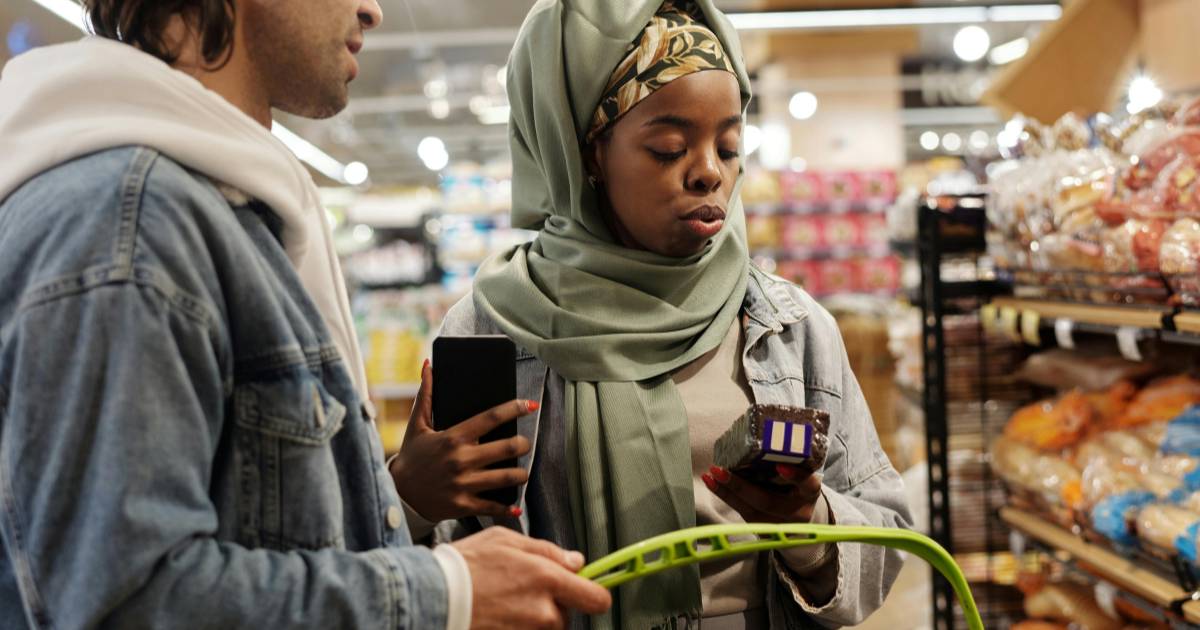
Researchers who use mobile ethnography consistently tell us that the behaviours captured in participants' own everyday environments are more intimate, authentic, and revealing than anything gathered through other methods. When someone records themselves hesitating over a product at the supermarket shelf, explaining their reasoning to camera, you're seeing something genuine and not a reconstruction of it.
For sustainability research this matters a lot. Sustainable intention and sustainable behaviour are famously misaligned. People describe themselves as far more eco-conscious than their actual habits suggest. Mobile ethnography is one of the few methods that can get close enough to observe that gap and begin to explain it.
What are the most common sustainability research use cases?
Sustainability research is a broad territory. Here are the areas where Indeemo most commonly supports briefs.
Purchase decisions and willingness to pay
Understanding why someone chooses or doesn't choose a sustainable product at the point of purchase. What's the trigger? Is it the label, the price, a habit, a recommendation? Screen recordings combined with video voice-over let researchers follow a shopper through a digital path-to-purchase in real time.
Daily consumption habits and routines
Energy use, food choices, packaging disposal, travel decisions the behaviours that add up over time. Diary tasks scheduled across a week or two give researchers a longitudinal view of routine behaviour that a single interview can never provide.
Brand perception and values alignment
Do consumers believe your sustainability claims? Do they feel your brand's values match theirs? Open-ended video responses reveal attitudes and associations that structured surveys smooth over. Especially relevant given that 70% of consumers now conduct their own research on sustainability claims before purchasing (Simon-Kucher, 2024).
Behaviour change interventions
When organisations brands, NGOs, government agencies want to design interventions that shift consumer behaviour towards more sustainable choices, they need to understand the current state first. What are the real barriers? What motivates change? Mobile diary studies let researchers observe the starting point before designing any intervention.
Gen Z sustainability attitudes
Younger consumers have grown up with climate change as a lived reality, not a future concern. Understanding how sustainability factors into their identity, their purchase decisions, and their expectations of brands requires research that meets them in their world, which is inherently mobile and social.
Employee sustainability research
Brands researching their own teams' sustainability attitudes and behaviours, or wanting to understand how their sustainability commitments land internally with the people they're trying to attract and retain.
How do you design a sustainability research study with Indeemo?
Running a sustainability study with Indeemo follows the same pattern as any mobile ethnography or diary study project, but with a few considerations specific to the subject matter.
Recruit from a global panel of 3 million+ participants if you need to reach specific sustainability segments, eco-conscious consumers, specific age groups, particular geographic markets without spending weeks on recruitment. Studies can run across multiple countries simultaneously, with tasks available in 30+ languages and automated transcription and translation built in.
Task design is where sustainability studies live or die. The golden rule is: less is more. Sustainability is a charged topic. Participants will perform eco-consciousness if given the chance. Keep tasks short, specific, and observational rather than evaluative. "Record a video the next time you do your weekly food shop" will give you richer data than "Tell us about your sustainable purchasing habits." Ask people to show you things, not explain things. The explanation can come later, through follow-up probing.
Participants capture their responses as videos, photos, screen recordings, and texts whatever best fits the task. A screen recording with voice-over is ideal for online purchase journeys. A photo is enough to document what's on the recycling pile. A short video captures the moment of decision at the shelf or the routine that plays out every morning without much conscious thought.
On the analysis side, AI-powered transcription and translation mean you can move from fieldwork to insight quickly. Theme detection and sentiment analysis help you find the patterns across submissions, so your team spends its time on interpretation rather than manual tagging.
Frequently asked questions
What's the difference between a diary study and mobile ethnography for sustainability research?
In practice, the two methods often overlap. A diary study is a structured research design where participants complete tasks over a set period – typically days or weeks to document behaviours and experiences over time. Mobile ethnography is the broader methodology: remote, in-context research conducted via smartphone. Most sustainability studies use both: the diary study structure to capture longitudinal behaviour, and the mobile ethnography approach (video, photos, screen recordings) to capture it authentically. Indeemo supports both within the same platform.
How many participants do you need for a sustainability study?
Most qualitative sustainability studies work well with 15 to 30 participants, though larger programmes can involve more. Because mobile ethnography captures rich, multi-layered data from each participant over time,not just a single survey response, you often need fewer people than you might expect to build a rounded picture. For multi-country studies, a typical approach is 8 to 12 participants per market.
How long does a typical sustainability research study run?
Field time ranges from a few days to several weeks, depending on the research question. A focused study on in-store purchase decisions might run for five days. A longer study tracking daily consumption habits or behaviour change over time might run for two to four weeks. AI-powered transcription and analysis mean the back-end turnaround is significantly shorter than it used to be.
Can you run sustainability research across multiple markets at once?
Yes. Indeemo is built for multi-country research. Recruit participants across markets simultaneously, set up tasks in any language, and manage everything from a single dashboard. Automated transcription and translation in 30+ languages means your team can review and compare submissions across markets in near real time, rather than waiting weeks for external translation.
Do you need to be a research expert to use Indeemo for sustainability research?
No. Whether you're an experienced research agency or a brand team running sustainability research for the first time, Indeemo can work for you. Use the platform independently, or partner with our Catalyst team who can handle study design, recruitment, moderation, and analysis – whatever level of support you need.