

Key takeaways
- Understanding consumer product usage and preferences means going beyond surface-level data to uncover the "why" behind consumer choices in their real-world context.
- Qualitative methods, particularly video diaries and in-home usage testing (IHUTs) – capture the emotions, attitudes, and everyday environments that shape how products are actually used.
- In-home usage testing lets consumers document product interactions through videos, photos, and text in the moment, providing authentic feedback that clinical settings rarely capture.
- Video diaries surface non-verbal cues, facial expressions, tone of voice, environmental context that reveal consumer sentiment more fully than written responses.
- Combined with generative AI analysis, these methods let brands move quickly from rich qualitative data to actionable product, marketing, and positioning decisions.
Why study product usage and preferences in context?
Today's market is more competitive than ever, with consumer preferences evolving quickly. Brands need to go beyond surface-level data to uncover the "why" behind consumer choices. That understanding is what makes the difference in developing products and strategies that resonate with the target audience.
Qualitative research offers a window into the consumer's world. Unlike quantitative data alone, it provides narrative, contextual data that brings consumer experiences to life. Through qualitative methods such as video diaries and in-home usage testing, brands capture the emotions, attitudes, and contexts that drive consumer behaviour, giving a rounded view of the customer's journey with the product.
What is in-home usage testing (IHUT)?
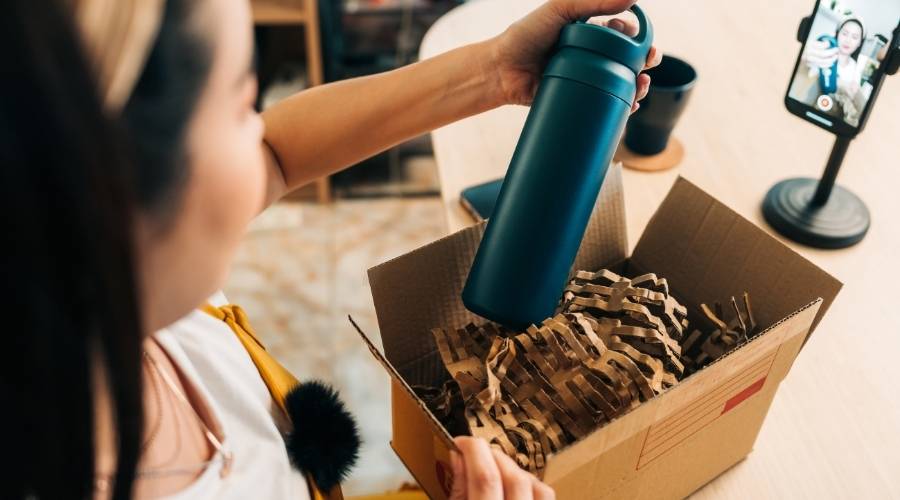
Understanding product usage often requires observing consumers in their natural environment. Taking an asynchronous approach with in-home usage testing (IHUT) through Indeemo, participants document their product interactions through videos, photos, and text, in the moments the product is actually being used.
This kind of firsthand data is valuable because it captures the real-world application of a product rather than the idealised version a consumer might describe in a focus group or survey. IHUT lets brands see how their products fit into the daily lives of consumers, increasing the accuracy of feedback and making product improvements more consumer-centric.
What is a video diary, and why does it matter here?
Video diaries are a dynamic method for capturing consumer behaviour and preferences. The approach invites participants to record and share their experiences with products or services in real time, providing an unfiltered view of their daily lives.
Unlike traditional surveys or interviews, video diaries capture the spontaneity and emotion of consumer interactions, giving researchers a rich narrative of how products are integrated into everyday routines.
The strength of video diaries lies in their ability to convey non-verbal cues, facial expressions, tone of voice, environmental context, which often reveal more about consumer sentiment than words alone. Researchers can observe the natural use of products, identify pain points, and understand the emotional journey that shapes the consumer experience. Seeing the product through the consumer's lens gives brands nuanced insight into product appeal, usability, and potential areas for improvement.
How do you uncover the "why" behind brand preference?
What makes a consumer choose one brand over another? Indeemo lets researchers assign tasks to participants that prompt them to describe their brand preferences in detail, in the moment of choice, not as an after-the-fact rationalisation.
This kind of direct feedback is essential for understanding the factors that influence consumer loyalty and decision-making. Whether it's a routine interaction with a product or a special occasion, the goal is to document the moments that matter and build a picture of consumer behaviour that reflects real life.
What methods work best for product usage research?
Four qualitative methods are particularly well-suited to capturing product usage and preferences.
Video diaries
Short, participant-led video entries over days or weeks. Strongest for capturing emotional reactions, natural product usage, and context around where and when products are used.
In-home usage testing (IHUT)
Structured, task-based research where participants use a product in their own home and document the experience across a defined period. Strongest for new product launches, iterations, and comparative testing.
Mobile ethnography
Longer, more observational studies where researchers follow participants across multiple moments of daily life to see how products fit (or don't fit) into broader routines. Strongest for category-level understanding and innovation research.
Screen recording and digital behaviour
For digital products – apps, streaming services, e-commerce experiences – participants record their screen interactions alongside video commentary. Strongest for UX research, digital journey mapping, and understanding friction points in digital product experiences.
How does generative AI speed up analysis?
Qualitative product research generates a lot of rich data – video, audio, images, text. Traditionally, analysis has been the bottleneck. Generative AI changes that. Indeemo's built-in AI analysis supports:
- Multilingual transcription and translation across 30+ languages
- Summarisation of long video or text entries into key themes
- Thematic analysis across whole studies to surface patterns
- Sentiment analysis to identify moments of delight and dissatisfaction
That combination lets brands move from raw qualitative data to insight quickly – shortening the time between consumer research and product or commercial decisions, and reducing analysis time significantly.
How does Indeemo support end-to-end product usage research?
Alongside the methods above, Indeemo supports the full research workflow:
- Recruit B2C and B2B participants in hours from a panel of 3 million+ participants
- Capture in-the-moment videos, photos, screen recordings, and texts in 30+ languages
- Run IHUTs, video diaries, mobile ethnographies, and comparative testing from a single platform
- Import follow-up interviews from Zoom or Microsoft Teams for deeper probing
- Create subtitled highlight reels to share consumer voice with product, marketing, or leadership teams
- Analyse rich data fast with generative AI for summarisation, translation, thematic analysis, and sentiment analysis
- Enterprise-grade security (SOC 2 Type II, ISO 27001) for brand and consumer data
Do you need a dedicated research team to run product usage studies?
No. Whether you're a brand marketing team exploring consumer research for the first time, or an experienced insights team, Indeemo can support you.
Use the platform independently, or partner with our Catalyst team for study design, recruitment, moderation, and analysis. If you have research ambitions but not the in-house capacity, we can lend a helping hand.
Frequently asked questions
What's the difference between an IHUT and a video diary? An IHUT (in-home usage testing) is typically structured around a specific product, with defined tasks the participant completes over a set period. A video diary is more open-ended – participants document moments that matter to them across a broader scope. IHUTs tend to produce more directly comparable data; video diaries tend to surface more unexpected insight. Many studies use both.
How many participants do you need for a product usage study? Most studies work with 20–40 participants per segment, depending on the research question. IHUTs for established products can run with smaller samples (15–25); broader mobile ethnographies for category understanding often benefit from larger samples (40–60+) across segments.
How long should a product usage study run? Most IHUTs run for 5–14 days, long enough to see consumers move past first impressions into habit. Video diaries are often similar in length, but can stretch longer for category or seasonality studies. Mobile ethnographies typically run 2–6 weeks.
How do you get consumers to use the product naturally rather than performing for the camera? Through good study design – tasks that fit into real routines rather than asking for set-piece demonstrations, reminders that are friendly rather than prescriptive, and an app interface that makes short, frequent entries easy. Most "performance bias" fades after the first day or two of a study.
How do you compare two products in an IHUT? Side-by-side comparative IHUTs work well on Indeemo. Participants use both products over the same period, with matched task prompts, and the data can then be analysed comparatively – by theme, by moment in the usage cycle, and by sentiment. This is particularly useful for line extensions, competitive benchmarking, and concept testing.