
Key takeaways
- Consumer feedback in market research goes beyond satisfaction scores. It's the qualitative understanding of how people experience products, brands, and services in their real lives, including their habits, routines, emotions, and decision-making.
- The best feedback is collected in context, in the moment, before people have time to forget or rationalise what they did. Video captures what text and surveys miss: tone, facial expressions, environment, and the "why" behind behaviour.
- Common methods include surveys, interviews, focus groups, diary studies, and mobile ethnography. Each has its strengths. Video-based approaches give you both depth and authenticity.
- With Indeemo, you can recruit participants from a global panel, collect video feedback in 30+ languages, analyse responses in minutes with AI, and create subtitled highlight reels for stakeholders.
- You don't need to be a research expert. Whether you're a seasoned researcher or a brand team collecting feedback for the first time, Indeemo's platform and Catalyst team can support you.
What is consumer feedback in market research?
Consumer feedback is any information that comes directly from your customers or target consumers about their experiences, behaviours, preferences, and perceptions. In a market research context, it goes well beyond star ratings or NPS scores. It's the qualitative understanding of how people actually live with your products and interact with your brand, captured through methods designed to surface the "why" behind what they do.
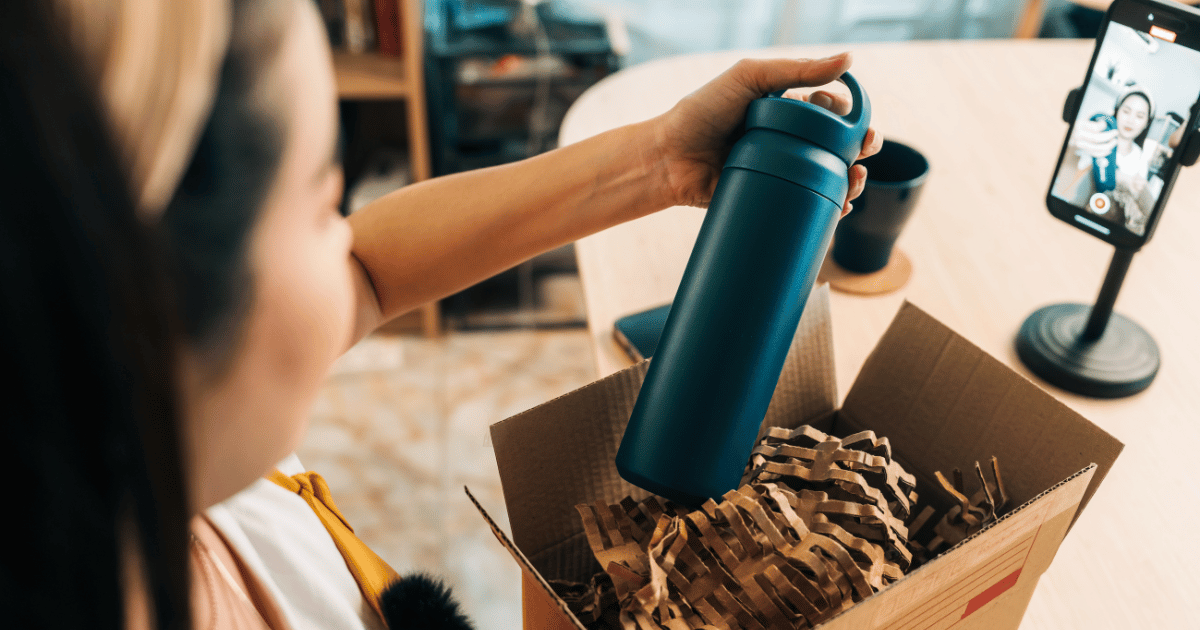
This might mean watching someone unpack a new product at their kitchen table and hearing their first reaction. Or following a shopper through their weekly grocery run and seeing which brands they reach for without thinking. Or asking a patient to document their daily medication routine over two weeks, so you understand not just whether they take their tablets, but what makes it easy or hard to stick with. With a video research platform like Indeemo, all of this can happen remotely, at scale, across markets.
The goal is to get closer to real behaviour and real feelings, not the version people reconstruct after the fact. Recall bias is well documented in research: people systematically misremember past events, and the longer the gap between experience and reporting, the less accurate the account. In-the-moment methods reduce that gap to near zero.
Why does consumer feedback matter?
Consumer feedback matters because it's the difference between guessing what your customers want and actually knowing. Three things make it worth the investment.
It improves the customer experience
Understanding how people experience your product or service at every touchpoint helps you make better design decisions. You can fix what's broken, but you can also spot opportunities to make things easier or more enjoyable before anyone complains. When feedback comes from real contexts, you see things that internal teams and lab testing can't. A checkout flow that works fine in a usability test might fall apart when someone is juggling it on their phone during a school pick-up.
It builds loyalty
When you listen to people and act on what they tell you, they notice. Addressing concerns and making customers feel heard builds stronger relationships. And customers who feel understood are more likely to come back, and more likely to recommend you to others.
It grounds your decisions in reality
Most organisations have plenty of quantitative data. You can track clicks, conversions, page views, and purchase frequency. But numbers alone don't tell you why someone abandoned their cart, switched brands, or stopped using a feature. Consumer feedback fills in the blanks. It gives your data team context, and it gives your leadership team confidence that they're making decisions based on what real people actually think and feel, not just what the spreadsheet suggests.
What types of consumer feedback should you collect?
Consumer feedback covers a wide range of territory. Here are the main types that matter for market research.
Occasions, habits, and daily routines
This is feedback about the specific moments when someone interacts with a product or service, including the situational context and how they feel about it. It could be something routine, like a morning coffee ritual, or something less frequent, like trying a new skincare product for the first time.
Understanding daily habits and routines shows you how products are actually used in everyday life. Morning routines involving skincare, evening rituals with technology, weekend shopping trips. These patterns reveal how your product fits (or doesn't) into someone's day, and what would make it easier to stick with.
Omni-channel experiences
How do people experience your brand across online and offline channels? Online feedback might tell you about website navigation, digital engagement, and how effective your marketing is at driving action. In-store feedback reveals how people interact with physical products, how the store environment affects their mood, and whether point-of-sale materials are doing their job. The most useful feedback connects these channels, showing how someone moves between browsing on their phone and buying in a shop. Shopper experience research is designed to map exactly this kind of cross-channel behaviour.
Product preferences and brand perception
This is about how people perceive your products and the brand behind them. Their attitudes, beliefs, and emotional connections. What makes someone choose your product over a competitor? What do they associate with your brand? These perceptions drive purchasing decisions, and they're often hard to surface through surveys alone because people don't always know (or can't articulate) what's influencing them. Watching someone talk about your brand on video, in their own words and their own environment, reveals things that a multiple-choice questionnaire can't.
What are the best methods for collecting consumer feedback?
There's no single best method. The right approach depends on what you're trying to learn, how much depth you need, and what resources you have. Here's how the main options compare.
Surveys remain useful for tracking metrics at scale, but they only tell you what people say they do, after the fact. Interviews and focus groups add depth but take people out of their natural environment.
The shift in recent years has been towards methods that meet people where they are. Mobile ethnography and diary studies use smartphones to collect videos, photos, screen recordings, and text responses from participants in the context of their real lives. You see their kitchen, their commute, their shopping trip. You hear them thinking out loud as they compare products on a shelf.
Why does video work better than text for consumer feedback?
Text-based feedback has its place, but video gives you something surveys and written responses can't: the full picture. Here's why.
You see real emotion
When someone speaks into a camera, their facial expressions, tone of voice, and body language come through. A furrowed brow when discussing a product feature tells you something different from a written "it was okay." The subtle difference between polite satisfaction and genuine excitement is hard to pick up in text. On video, it's obvious.
You see the context
You don't just hear about someone's morning routine. You see their kitchen, notice the competing brands on the counter, watch them juggle breakfast while checking their phone. The real environment where products are used reveals things people would never think to mention in a survey response.
You pick up what people don't say
So much of how people communicate is non-verbal. Pauses, gestures, glances at other products, the way someone handles packaging. Research by psychologist Albert Mehrabian found that when someone's words and body language are inconsistent, people rely far more on facial expressions and tone of voice than on the words themselves (Mehrabian & Ferris, 1967). Video is the only feedback method that preserves all of these cues.
You get stories, not data points
Video feedback tells a story. You see a participant's journey with your product from first impression to daily use. These narratives build empathy across your team. When a stakeholder watches a real person struggle with your checkout flow or light up when they try a new feature, it changes the conversation. A highlight reel of real consumer moments is harder to ignore than a slide deck.
You see products in real life
Video lets you observe your products in the settings where they're actually used. A fitness brand watching someone use their equipment during a real workout. A food brand seeing how their packaging performs in an actual kitchen. These real-life observations reveal things about functionality, convenience, and fit that lab testing and surveys miss entirely.

Why does context matter for consumer feedback?
Without context, data can mislead you. A conversion rate looks impressive until you learn it was inflated by bot traffic. A customer satisfaction score looks healthy until you watch video of people working around your product's limitations rather than enjoying it.
Good market research has always relied on blending quantitative and qualitative data. The numbers give you evidence. The qualitative research explains the why. But as digital transformation has produced more and more quantitative data, many organisations have drifted towards making decisions based on numbers alone. The result is a kind of "digital divide" where brands know less and less about the people behind their data.
Consumer feedback collected in context, through video, in people's own homes and daily routines, closes that gap. Researchers and decision-makers get to see the reality that sits behind the metrics. You see how people actually behave, not how they say they behave in a survey completed days later.
"Quantitative studies must be done exactly right in every detail or the numbers will be deceptive. There are so many pitfalls that you're likely to land in one of them and get into trouble." — Nielsen Norman Group
How do you collect consumer feedback with video?
Collecting consumer feedback through video is simpler than it used to be. With a platform like Indeemo, the process looks something like this.
Start with a clear question
What do you want to understand? Are you testing a new product, mapping a shopping journey, exploring brand perception, or understanding daily habits? Your research question shapes everything that follows, from who you recruit to what tasks you set.
Recruit the right participants
With Indeemo, you can recruit from a global panel of 3 million+ participants and launch projects within hours. If you already have a customer list, you can invite your own participants instead. Either way, the goal is finding people who represent the audience you're trying to understand.
Design tasks that show, not tell
Ask participants to record what they're doing, not just what they think. "Show us your morning skincare routine" is more revealing than "How do you feel about your skincare products?" Keep tasks short, open-ended, and conversational. Participants respond using the Indeemo app by recording videos, photos, screen recordings, or text responses.
Collect responses in context
Participants complete tasks in their own environment, on their own schedule. Everything is captured in the moment, before memory fades or post-rationalisation kicks in. The app works like social media that people already know how to use.
Analyse with AI
Indeemo's generative AI tools transcribe and translate video responses in 30+ languages, detect themes and sentiment, and help you move from raw data to insight faster. You can search across all responses by keyword, tag and organise content, and build journey maps and collages from the data.
Share what matters
Create subtitled highlight reels from the best video moments and share them with stakeholders. A two-minute reel of real consumers reacting to your product is worth more than a 50-page report when it comes to building empathy and driving decisions.
What can you learn from consumer feedback?
The specific insights depend on your research question, but here are some of the most common applications.
Product testing and development
Put a product, prototype, or new packaging in front of consumers and watch them use it in their real environment. You'll learn whether it works the way you intended, what confuses people, and what delights them. This is richer and more reliable than asking someone to recall their reaction in a survey a week later.
Brand perception and loyalty
Ask people to talk about your brand in their own words, on video. What do they associate with it? How does it compare to competitors in their mind? What keeps them coming back, or what's making them think about switching? Video reveals the emotional and instinctive connections that text responses flatten.
Shopper journeys and path to purchase
Follow a participant from the moment they start thinking about a purchase through to the decision itself. Screen recording with voice-over lets you see exactly how someone navigates your website or app while hearing their thought process. In-store, video captures the shelf-level decisions that determine which brand ends up in the basket. Path-to-purchase research is one of the most popular applications for video-based consumer feedback.
Customer experience across channels
Map real touchpoints across a customer's experience rather than hypothesising about them in a workshop. See how people move between your website, app, and physical store. Journey mapping helps you identify the moments that matter most, and the ones that cause frustration.
Habits, routines, and occasions
Diary studies over days or weeks reveal how your product fits into someone's real life. Morning coffee rituals, evening skincare routines, weekend shopping habits. These patterns show you where your product adds value and where it falls out of the routine.
Do you need to be a researcher to collect consumer feedback?
No. Whether you're an experienced qualitative researcher or a brand team exploring consumer feedback for the first time, Indeemo can support you.
The platform is designed to be accessible. The participant app uses social-networking-style UX that people already know how to use. AI handles the heavy lifting on transcription, translation, and analysis. And if you need help with any part of the process, we're here.
Use the platform independently if you have the expertise in-house. Or partner with our Catalyst team for study design, recruitment, moderation, analysis, or the full project. If you have research ambitions but not the capacity or expertise to fulfil them, we can lend a helping hand as and when you need it.
Indeemo can be more than a platform. It can be a partnership.
FAQs about Mobile Ethnography
They're closely related. Customer feedback comes from people who have already bought from you or used your service. Consumer feedback is broader and includes potential customers, lapsed customers, and people in your target market who may never have interacted with your brand. In market research, the terms are often used interchangeably, but "consumer feedback" typically signals a wider scope.
Most video-based studies work well with 15 to 30 participants. Because video captures rich, detailed data from each person, you often need fewer participants than you'd expect. Larger programmes can involve hundreds across multiple markets.
It depends on the method. A focused video survey can be completed in a few days. A diary study tracking daily routines might run for one to four weeks. AI-powered transcription and analysis have shortened the back-end significantly, so you can go from fieldwork to insight much faster than traditional methods allow.
Yes. Many research teams use video diary tasks as pre-work before focus groups or interviews. Participants arrive having already reflected on the topic, and moderators have real-world video to reference during the discussion. Video feedback also works well as a follow-up after a quantitative study, adding depth and context to the numbers.
A smartphone with a camera and a reasonable internet connection. The Indeemo app works on both iOS and Android. Participants can also use screen recording on tablets and iPads.