Key takeaways
- Pre-tasking is an asynchronous qualitative research method where participants complete short tasks on their smartphone, capturing videos, photos, screen recordings, and texts from their real lives before an online interview or focus group.
- It closes the gap between what people say they do and what they actually do. Because captures happen in the moment and in context, there is no reliance on memory or post-rationalisation.
- The combined approach is often described as "explore and explain": the pre-task surfaces real behaviour, and the sync session is used to probe and understand the why.
- Pre-tasking works across online IDIs, focus groups, UX research, concept testing, healthcare research, shopper journeys, and multi-market studies.
- With Indeemo, you can recruit from a 3 million+ global panel, run tasks in 30+ languages, analyse with AI, and share subtitled highlight reels with stakeholders.
What is pre-tasking in qualitative research?
Pre-tasking is an asynchronous qualitative research method that lets you capture how participants behave, think, and feel before you meet them for an online interview or focus group. Participants use a smartphone app to complete short tasks over several days, sharing videos, photos, screen recordings, and texts from their everyday lives. Researchers view the material on a dashboard, probe with follow-up comments, and then build the sync session around what they have already seen. In method terms, pre-tasking uses the same app, techniques, and task design as a mobile diary study, but the material is gathered specifically to inform a sync session that follows.
The name is plain. The effect is not. A one-hour video interview gives you a glimpse of someone's life, usually filtered through what they remember and how they want to come across. A week of pre-task entries gives you the equivalent of spending time with them in their kitchen, on their commute, or during their shopping trip, while they are actually doing the thing you want to understand. By the time the live session begins, you are no longer meeting a stranger.
Why does pre-tasking work?
It works because it captures behaviour instead of recollection.
In a typical online IDI or focus group, participants sit at a laptop and tell you what they think they do. You have to trust that their account is accurate. The reality is that almost all behaviour described in a sync session is claimed behaviour. People are good at constructing a logical, flattering story about what they did after the fact. They post-rationalise, they forget the small things, and they quietly edit out the moments that don't fit the story they want to tell.
Pre-tasking changes the source material. Instead of asking someone to recall their morning coffee routine on Tuesday, you have a video of them making it. Instead of asking how they shopped for running shoes last month, you have a screen recording of them browsing three retailer sites with voice-over commentary. The data is captured before it can be edited, polished, or forgotten.
A few reasons this matters in practice:
- In the moment, not in memory. Participants record when something is happening, not days later. The result is gritty, raw, and specific. It's the kind of detail that strong qualitative work depends on.
- In context, not in a facility. Behaviour is recorded in the place it actually happens. Kitchen, commute, shop floor, bathroom cabinet. Context is half the insight.
- No researcher effect. The participant is on their own. Nobody is watching, nodding, reacting. People behave more naturally when the observer isn't physically present.
- Repetition reveals patterns. One breakfast video is a data point. Seven breakfast videos across a week is a pattern. A longitudinal pre-task surfaces routines and rituals that a single interview simply can't.
When should you use pre-tasking?
Pre-tasking fits almost any qualitative design where you want to understand real behaviour rather than reported behaviour. The most common applications are below.
Before online IDIs and focus groups
The classic use. Participants complete tasks over several days, and the sync session is built around what they captured. You go into the interview already knowing their routines, their brand choices, and their frustrations. The hour isn't spent on warm-up questions. It's spent on the questions that actually need a conversation.
Before UX labs and user interviews
Useful for design research where you want to see how someone uses a product, app, or website in their natural environment before you bring them into a structured session. Screen recordings with voice-over capture the genuine navigation, hesitation, and confusion that a lab setup can't quite reproduce. For broader in-context behaviour beyond digital interactions, mobile ethnography is the parent method pre-tasking sits within.
Multi-market and multi-country research
One of the strongest use cases. Pre-tasking removes travel, local moderator availability, and timezone friction. You can run tasks across several markets at once, in local languages, with results uploading to a single dashboard as participants complete them. Covered in more detail further down.
Healthcare and patient research
Particularly strong for sensitive topics. Participants are often more candid recording in private than speaking to a researcher face to face. For patients with long-term illness, pre-tasking captures the daily reality between clinic visits. Side effects, routines, coping strategies. The kind of detail a retrospective interview can't surface.
Concept, packaging, and stimulus testing
Pre-tasking is one of the few remote methods that can carry stimulus well. You can embed images, video concepts, or packaging mockups inside a task and ask participants to react in context. A concept viewed in their kitchen gets a different response than one viewed in a focus group facility. For a wider view on how this fits into the async research landscape, see our guide to asynchronous qualitative research.
Shopper research and path to purchase
Follow a participant from first consideration through to purchase and post-purchase use. Screen recordings capture browsing and checkout behaviour online. Video captures the in-store experience. The pre-task builds the whole journey, and the sync session unpacks the decisions inside it. For a deeper look at mapping this end-to-end, see our guide to the consumer purchase journey.
Post-tasking after the interview
Less talked about, but worth knowing. Post-tasking extends engagement after a focus group or IDI by asking participants to document what they actually do in the days that follow. This bridges the gap between what people say in a discussion and what they do afterwards, and it's especially useful for concept testing, where stated intent and real behaviour often diverge.
What are the benefits of pre-tasking?
The short answer: you end up with richer, more authentic material, and you spend your sync-session time on what actually matters. Specifically:
- In-the-moment, in-context capture. Participants record behaviour as it happens, in the place it happens. You see the detail and the environment, not a summary of either.
- Works across languages and markets. Tasks can be set up in 30+ languages, with automated transcription and translation, so geography doesn't limit what you can study.
- Video intros build rapport before the live session. A short video from the researcher at the start of the task list turns a cold login into a warmer, more personal engagement. Participants show up to the sync session already familiar with you.
- Flexible media formats. Participants can respond with videos, photos, screen recordings, or written entries, whichever suits the moment. You get authenticity because the medium adapts to the content.
- Embed stimulus directly in tasks. Images, videos, and concepts can sit inside the task prompt itself, making pre-tasking one of the few methods that carries concept testing well outside a facility.
- The sync session gets better. When you already have a week of captured behaviour from every participant, the live session stops being exploration and becomes explanation. This is covered in more detail below.
Sync-only online qual vs sync + async pre-tasking
How does pre-tasking work in practice?
The shape of a pre-tasking study is straightforward. You design the tasks, recruit participants, send them the app, and watch the material come in as they complete it.
- Design the task list. A task list is a sequence of short prompts. Each asks the participant to do something and capture it. Take a photo of your running shoes, record a video of your morning coffee routine, screen-record the last time you compared prices online.
- Recruit and onboard participants. Either from your own panel or Indeemo's global panel of 3 million+ participants. Screeners run the same way they would for any qualitative study.
- Participants capture over several days. Push notifications remind them when tasks are activated. They complete them on their own time, in context. Uploads happen in the background.
- Probe as material comes in. You don't wait for fieldwork to end. As entries appear on the dashboard, you can comment, ask follow-up questions, and request clarification, all inside the platform.
- Run the sync session. When the online IDI or focus group comes, you already know each participant's routines, brand use, and pain points. You spend the hour on depth, not discovery.
Task design: three common approaches
Tasking structure shapes the study. Three patterns cover most cases.
Many studies combine approaches. A pre-task for a shopper study might have a sequential set of onboarding tasks, then an all-at-once block for the shopping itself.
Probing asynchronously
As participants upload content, it appears on the researcher dashboard in a media-rich feed. Researchers can comment on entries, ask follow-up questions, and request more detail, similar to how a social app works. This isn't passive observation. Participants respond to comments, add context, and clarify in the moment. By the time fieldwork ends, most of the deeper probing has already happened.
How do you combine pre-tasking with online IDIs and focus groups?
Pre-tasking is often paired with a live session afterwards. Researchers sometimes describe this as "explore and explain."
The pre-task is where you explore. Participants capture behaviour as it happens. You watch it, probe it, get a sense of who each person is. By the end of the week, you know their routines, their brands, their frustrations, their language.
The sync session is where you explain. You're no longer meeting them for the first time. You're not spending 20 minutes on warm-up. You're asking them to walk you back through specific moments you already have on video. To relive what happened and tell you why.
The "supercharger" technique
One practical technique: during the online IDI, screen-share the participant's own footage back to them. Pull up the video of them making breakfast, or the screen recording of them abandoning a checkout, and ask them to talk through it. "Take me back to this moment. What were you thinking here? What happened next?"
It's a small change that shifts the conversation. You stop asking people to remember and start asking them to explain. The difference in what they say is significant.
How does pre-tasking work for multi-market and multi-country research?
Multi-market qualitative research used to mean flights, hotels, local moderators, and long project timelines. Pre-tasking reshapes the economics. You can run tasks across several countries at once, in local languages, with material uploading to a single dashboard as each participant completes it. No travel. No timezone scheduling. No waiting weeks for external translation.
The approach is particularly useful for studies of behaviours that are hard to observe in person. Anything that happens early in the morning, late at night, on weekends, or inside someone's private space. Running habits. Morning rituals. Bedtime routines. Discreet personal-care moments. These are places a researcher physically can't be.
A sports brand case study
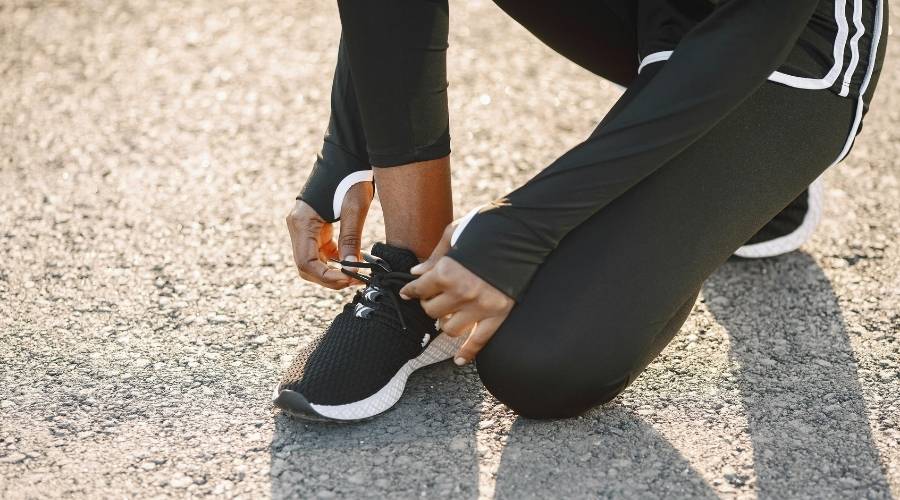
A global sports brand wanted to understand how runners across multiple markets actually trained, from marathon runners through to casual, weekend-morning joggers. Running habits are hard to research traditionally: they happen early, late, at weekends, and often in a participant's personal time. Adding a researcher in the room changes the activity itself.
The team ran a week-long pre-task using Indeemo. Participants were asked to photograph their current running gear, diary their training routines across the week, and reflect on what they learnt about their own habits.
Across four countries and four languages, 104 participants uploaded more than 1,100 videos, photos, and screen recordings over the week. The dashboard let the team compare segments by market and ability level, and the real-time moderation feature allowed the researchers to probe individual entries as they came in, from 6am long runs to late-night treadmill sessions. At the end of the fieldwork, the brand had comparable, in-context behavioural data from four markets, gathered in a single week without anyone leaving their desk.
How Indeemo supports multi-market pre-tasking
A few capabilities do the heavy lifting:
- Global panel of 3 million+ participants. Recruit in multiple markets in hours, without needing to engage separate local recruiters for each country.
- Tasks in 30+ languages. Set up your task list in local languages. Automated transcription and translation mean you can review and compare material across markets almost immediately.
- Central dashboard. All markets feed into one dashboard, so the team can cross-compare segments without juggling separate country reports.
- In-market support where you need it. If you don't have in-country moderation or cultural expertise, our Catalyst team can step in.
Do you need to be a researcher to run a pre-tasking study?
No. Whether you're an experienced qualitative researcher or a brand team exploring pre-tasking for the first time, Indeemo can support you.
Use the platform independently if you have the expertise in-house. Or partner with our Catalyst team for study design, recruitment, moderation, and analysis, as much or as little as you need. If you have research ambitions but not the capacity or in-house expertise to fulfil them, we can lend a helping hand as and when you need it.
Indeemo can be more than a platform. It can be a partnership.
How is pre-tasking data analysed?
Analysis is where pre-tasking used to get heavy. A week of fieldwork across 20–30 participants can mean hundreds of videos to watch and transcribe. AI-powered tools have changed the pace of that significantly.
With Indeemo, the platform handles:
- Automated transcription and translation in 30+ languages
- AI-assisted theme detection across video, photo, and text entries
- Sentiment analysis for spotting emotional signals across the dataset
- Keyword clouds and filters for quickly surfacing patterns
- Tagging and timeline views for organising material by participant, segment, or task
- Subtitled highlight reel creation so you can share the rawest, most compelling moments with stakeholders without a separate edit pass
The effect is that the analysis phase of a pre-tasking study is now a matter of days rather than weeks, and highlight reels can go to stakeholders while the insight is still fresh.
Frequently asked questions
What's the difference between pre-tasking and a diary study?
The distinction is subtle. A diary study is a standalone qualitative method where participants document behaviour over time as the primary research activity. Pre-tasking uses the same tools and techniques, but serves as the first phase of a larger study, setting up a sync session (an IDI, focus group, or UX interview) that follows. In practice, the underlying app, task design, and participant experience are identical. The difference is how the material is used.
How long should a pre-task run before an IDI or focus group?
Most pre-tasks run between three days and two weeks. Shorter tasks (3–5 days) work well when you want focused material for a specific question. Longer ones (1–2 weeks) are better for capturing routines, repetitive behaviour, or journeys that unfold over time. The sync session typically happens within a few days of fieldwork ending so the material is still fresh.
How many tasks should I give participants?
Enough to capture what you need, not so many that participation becomes a chore. A rough guideline: one or two tasks per day, each taking 10–20 minutes of the participant's time. Studies that ask for too much tend to see drop-off and fatigue, which shows up in the quality of later entries.
Can pre-tasking replace focus groups and IDIs entirely?
Sometimes, yes. For discovery research, diary-style studies, or journey mapping, pre-tasking produces rich enough data to stand alone. For research where you need to probe, push back, or see how a group reacts to a concept in real time, combining pre-tasking with a sync session produces the strongest outcome. The pre-task gives you the behaviour to probe; the live session gives you the conversation to explain it.
What devices do participants need?
A smartphone with a camera and an internet connection. Participants download the Indeemo app (iOS or Android) and complete tasks by recording video, taking photos, writing text, or screen-recording. No specialist equipment, no training, no installation beyond the app itself.